Why Ornamental Skulls Are More Than Décor
1. Why Ornamental Skulls Are More Than Décor
Ornamental skulls often provoke a reaction before they invite understanding. For some, they are unsettling. For others, they are symbolic, cultural, or deeply aesthetic. At Skulls Ke, skulls are treated not as novelty objects, but as materials with history, presence, and meaning.
Across cultures, skulls have long represented cycles — life and death, continuity, memory, protection. In many African contexts, animal remains were never simply discarded; they held spiritual, practical, or symbolic value. Skulls Ke draws from this lineage while placing the work firmly in a contemporary context.
In modern interiors and creative spaces, there is a growing shift toward objects that carry weight — pieces that invite pause and conversation rather than blending into the background. Ornamental skulls occupy that space. They are not soft décor. They are deliberate objects that anchor a room and challenge how beauty is defined.
Skulls Ke pieces are created to sit confidently in studios, galleries, offices, and homes where character matters more than comfort. They are meant to be noticed, questioned, and lived with — not explained away.
2. From Bone to Art: How a Skulls Ke Piece Is Made
Every Skulls Ke piece begins with ethical sourcing. The skulls used are by-products, obtained responsibly and never harvested for the sake of art. This foundation matters — not just ethically, but conceptually. The work starts with respect for the material.
Once sourced, each skull is thoroughly cleaned, preserved, and prepared by hand. This process is slow and deliberate, ensuring durability and longevity while maintaining the integrity of the form.
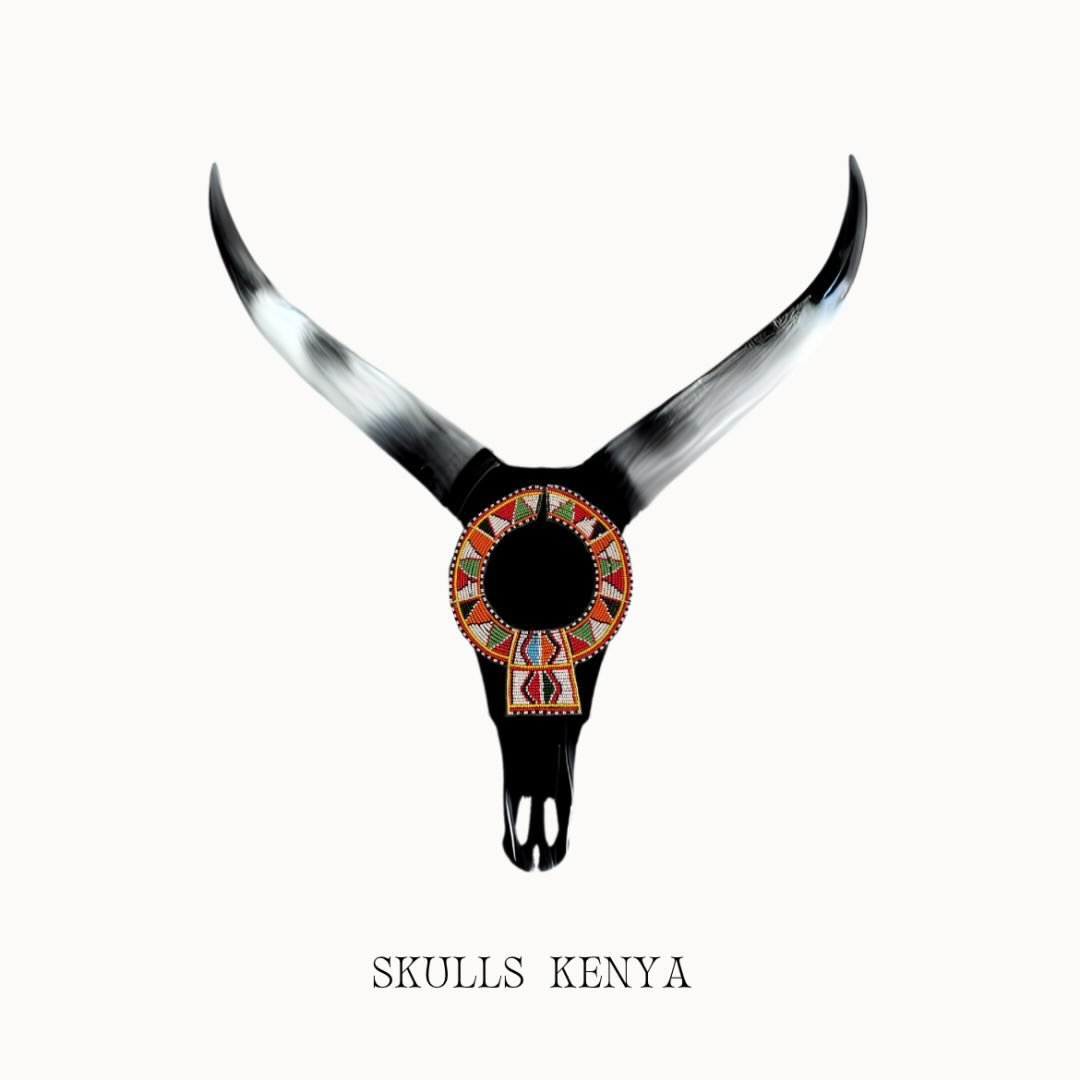
Decoration follows preparation. Using beadwork and paint, each skull is individually finished with patterns inspired by African symbolism, geometry, and visual rhythm. No templates are used. Each piece develops organically, guided by form, balance, and intuition.
The result is never replicated. Even when working within similar styles or palettes, no two skulls emerge the same. Each carries its own markings, weight, and presence.
At Skulls Ke, the process is as important as the final object. The work sits somewhere between craft and contemporary art — grounded in tradition, but open to interpretation.
3. Styling Ornamental Skulls in Creative Spaces
Ornamental skulls work best when they are allowed to stand on their own. They are not filler pieces, and they don’t need excess styling to justify their presence.
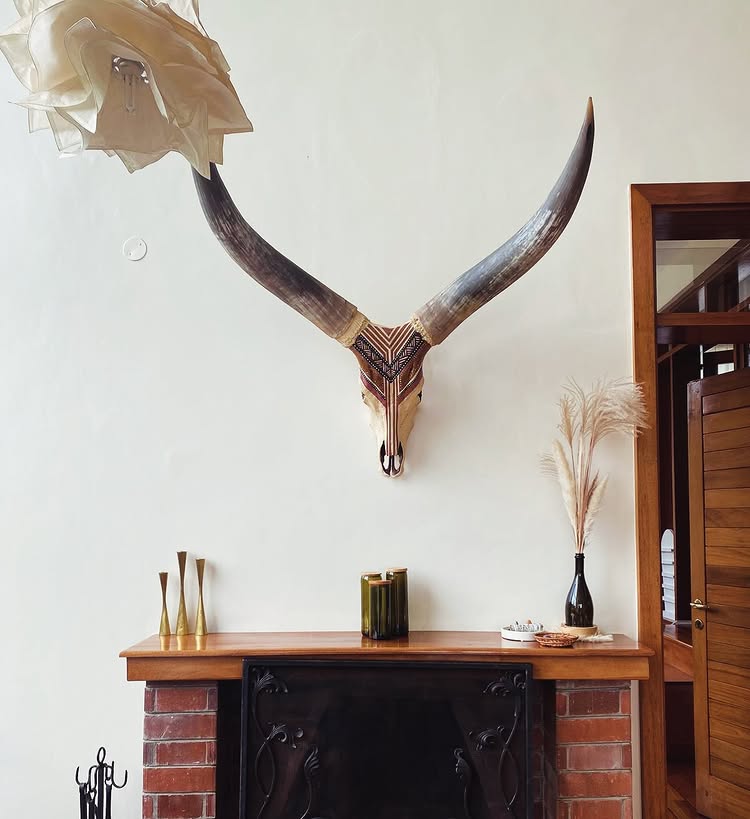
Mounted skulls function well as sculptural objects — placed on shelves, plinths, or console surfaces where their form can be fully appreciated. Framed skulls, on the other hand, create strong visual anchors on walls, especially within art groupings or gallery-style arrangements.
In interior settings, skulls pair well with:
-
Neutral or textured backgrounds
-
Natural materials like wood, stone, and concrete
-
Minimal furniture that allows space for contrast
Creative studios and offices often use skulls as focal points — objects that reflect bold thinking, risk-taking, and individuality. In homes, they tend to live best in intentional spaces: entryways, studies, or rooms designed for expression rather than uniformity.